Empowering Japanese independent women who contribute to changing
An organization has its fate determined by its leaders. What is a Japanese man that is called a "leader"? What kind of spirit does a true leader who leads and unites everyone have? A true leader is surely one with a well-honed soul and body. The time has come to "dig deeper into Bushido" once again. Food medicine course: Tuition fee: 000,000 yen (excluding tax) All expenses included Lecturer: Kana Himiya. Tuition fee: 000,000 yen (excluding tax) All expenses in
An organization is determined by the talent of its leaders. What kind of Japanese boy is named "Leader"? What kind of spirit does a true leader have, who leads and unites everyone? A true leader can only be said to have a well-honed soul and body. The time has come to "dig deeper into Bushido" once again.
Food doctor: Tuition fee: 000,000 yen (excluding tax) All expenses included
Lecturer: Kana Himiya. Tuition fee: 000,000 yen (excluding tax) All expenses included
Food medicine specialist: Tuition fee: 1.2 million yen (excluding tax) All expenses included
In charge of Kana Himiya Tuition fee: 1.5 million yen (excluding tax) All expenses included 6 zoom courses, 1 night, 2 days, weekend Yatsugatake training camp (2 sessions), thorough lectures
What should we do to realize "building a happy world" within the current global social situation? I believe that the lifestyle, culture, and spirit that the Japanese have built around the world can be of great help. now! The world is paying attention. Japanese society has many useful things. One core of these is Bushido. How samurai trained their minds and bodies, how they lived their lives, and what they ate. I think it is necessary and meaningful for Japan and the world to make this known to people around the world.
There are many aspects to Bushido, so here we will focus on the samurai's soul and food.
There are many battles in the world that are fought against each other based on past circumstances, and there seems to be some sort of revenge-like nature at work. In response to this, in Japan, the Tokugawa Shogunate issued an ``Ordinance Prohibiting Vengeance'' in order to break the chain of samurai taking revenge. It seems that today's world needs that. The chain of repetition must be broken somewhere. One possible way to do this is for the Japanese themselves to firmly reaffirm their culture of Japanese thought, art, and religion through ``Bushido,'' and to spread that culture to the world. This can be said to be extremely important.
For example, there are four works that have been written about Japanese culture in English and made their contents known to the world.
Actually, these four important works. Japanese Bushido is included in everything. However, the educational world in Japan after World War II was controlled by the occupation army, and the Japanese people were instilled with a sense of war criminals and a self-deprecating view of history, and the greatness that Japan had created was rather put aside for later, and the Japanese people were not consciously aware of their intentions. I moved in the direction of deleting it.
In fact, the history of Japanese society began before the Heian period, but it was not until the Edo period that it began to be talked about in the form of Bushido. This is because during the long and stable Edo Shogunate, which lasted for 265 years, the spirit of Bushido was strong and prevailed as a governing ideology.
Here, we will talk about Bushido as Nitobe Inazo's Japanese spirit "Bushido" (BUSHIDO: The Soul of Japan) I will mainly use this book to discuss in detail the contents of the era in which Bushido was born and its modern aspects. ``The daily life and life of a samurai'' A proverb that clearly serves as one of the guidelines for Bushido is a verse from Hagakure. "Bushido means death and discovery."
It is an attitude of ``leaving aside'' all problems in the face of one's own death. This means that ``every day is a life,'' and it was hoped that people would live their lives in a way that would not make them feel ashamed even if they faced death at any time. I live each day with the idea that even if I die, my thoughts will not be left behind in future generations.
For this reason, samurai education was not just about physical training, but also mental training was essential. In a sense, I didn't know when I was going to say goodbye to this life, so I was welcoming the ritual of death in every corner of my life, including my meals. Not all samurai would have done so, nor would they have been able to do so. However, during the approximately 60 years of stability during the Edo period, Bushido fermented, matured, and was perhaps elevated to its state of mind. The content was the ultimate and supreme teaching for each human being, the moral ethics that must be followed, and the worldview and life view that lie behind it.
In order to govern the nation, the samurai of the Edo period needed people with various specialized skills not only for politics but also for economic, social, and cultural matters, as well as for many businesses.
How will we plan and spread Bushido from now on? It is desirable to make the contents of Bushido widely, accurately and promptly known to the people of the world. Isn't this an urgent matter?
However, the important thing about Japanese people is that they live in a completely different world from Bushido, with an overwhelming majority of people living lives where money is all about them. To this end, it is essential that the Japanese themselves once again increase their interest in Bushido, which can be considered a Japanese asset, and have them learn, acquire, and put it into practice. At the same time, "overseas dissemination" is necessary.
What we must not forget is the content of Bushido and why such a path was created in Japan. I also have to mention. In fact, this is where the seeds of ideas that will carry the next era lie.
In Japan, it is common to eat mandarin oranges when you have a cold because you have a fever and lack vitamin C, but in China, when you have a cold and a fever, you do not eat mandarin oranges. This is because mandarin oranges are a food for heat and warmth, or yang, and should not be eaten when the body is hot. This way of thinking is the concept of the ancient Chinese concept of "Yin Yang and the Five Elements''.
The "Yin-Yang Five Elements'' is an idea that forms the basis of the Chinese view of nature, and it is believed that "Yin'' and "Yang'' exist in all phenomena and things, and that they always influence each other. According to the "Yin-Yang Five Elements,'' the natural world is classified into five elements: wood, fire, earth, metal, and water. In the same way, ingredients are classified into acid, bitter, sweet, hot, and salty (from salt to It is classified into five categories: the "Five Flavors'' of "I'', and the "Five Sexes'' of "Heat, Warmness, Normality, Coolness, and Coldness''.
Therefore, for this reason, in China, if you have a cold and have a fever, you should not eat "mandarin oranges,'' which are foods that promote "heat and warmth.''
Due to the physical nature of having to transport food across the country's vast territory, many of the ingredients used in Chinese cuisine are dried. However, drying food ingredients is not just for preservation; by drying them in the sun, "Yang Qi'' is injected into the food, and by eating it, "Qi" is absorbed into the body. I think this is due to the influence of the idea of "yin and yang".
In ''China's Yin-Yang food culture,'' I mentioned cases in which not only Japanese food culture is irrational, but Chinese food culture can also be explained for the first time by spiritual reasons. This is the idea of ''Yin Yang and the Five Elements,'' which form not only food culture but also the ancient Chinese cosmology.
The definition and characteristics of Shojin Ryori are that it was established as a dietary method in Zen temples during the Kamakura period, that it adheres to the precepts prohibiting the killing of living things, that it does not use seafood or meat, and that it only uses plants such as vegetables, grains, beans, and seaweed. It is a meal consisting of sexual foods, is often served in the form of a honzen meal or a kaiseki meal, is served with one soup and three dishes, or two soups and five dishes, and is basically prepared with a light flavor using vegetarian soup). It was given. The ''Santoku Rokumi'' advocated by Dogen, the founder of the Soto sect, in his Tenzo Kyo-kun is the basis of Shojin Ryori. According to Nyoho (according to the teachings of Buddha), the six tastes are the five tastes of sweetness, sourness, saltiness, bitterness, and spiciness, with the addition of blandness to make six. The five basic chemical tastes include sweetness, sourness, saltiness, and bitterness, as well as umami, but the five tastes of the Yin-Yang Five Elements theory include spiciness instead of umami. Since the students had already learned about the five basic tastes in culinary arts, it was further explained that there are differences in the classification of taste depending on the field.
Light taste is defined in the dictionary as ''Awaiji, light taste (Kojien)''. Here, we will introduce the interpretation that the taste of dashi, which is essential for Buddhist vegetarian cuisine, is ``light taste'', that is, the umami and flavor of kelp and dried shiitake mushrooms, or the taste of the ingredients themselves, and we will discuss the main theme of this course. This was an introduction to the taste of dashi.
The knife ceremony involves using a knife and Mao chopsticks to cut the material and present it to His Majesty without touching the material with bare hands, but there are also various actions that have meanings. It incorporates Buddhism, Yin-On-Yang, and Confucianism, and has been passed down to this day with feelings such as gratitude for the materials, memorial services for living creatures, and exorcism of evil spirits.
We also dedicate it every year at Meiji Shrine, Heian Shrine, Kasuga Taisha Shrine, Ise Shrine, etc., and it has been handed down as a ritual dedicated to the gods, but it is said that it is performed at parties etc. Sometimes. This knife ceremony is a traditional ceremony that allows us to get a glimpse of the elegance and elegance of the life of the Omiya people, and because this knife ceremony existed, it is the basis of today's Japanese cuisine. That's why. There is a concept behind this Japanese cuisine, and it is called the theory of Yin-Yang and the Five Elements. This yin-yang, five-element theory refers to opposites such as yin and yang, such as north versus south, or male versus female.
This knife also has yin and yang. I'm bringing a knife with me now, but in the past, most people in Japan used single-edged knives. Most of the knives used at home today are double-edged, but in the past, except for Nakiri knives, most knives were single-edged, with the blade here and the back side. The side with this blade is the yang, and the back side is the yin. If you do this, the cut material will also have yin and yang.
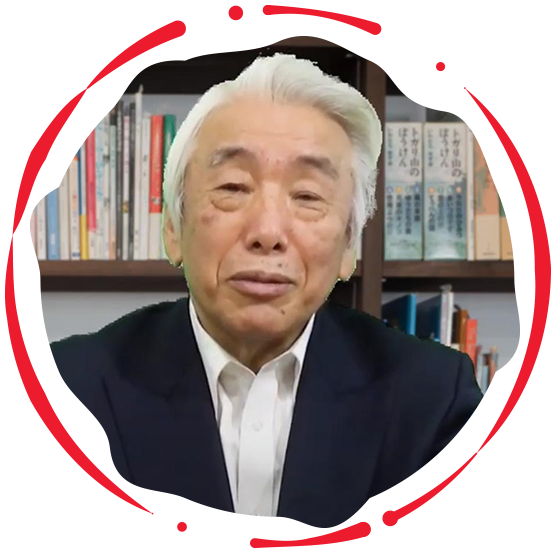
Ken Tobioka, ``The man who was said to be the brain of Japan.'' Completed doctoral course at the University of Tokyo Graduate School of Engineering. He will major in aeronautical engineering and study systems science. He is also involved in the launch and research of rocket satellites at the University of Tokyo.
He is Japan's leading expert on predicting the future. While launching rockets and satellites and engaging in research, he has pursued a variety of disciplines including philosophy, sociology, economics, psychology, and biology. While he is engaged in various commissioned research related to the government and local governments, he has also received commissioned research from private companies and achieved results. Currently, he is active in a variety of fields, including establishing the ``Research Institute for Humans and Science'' and presiding over the future prediction research group ``WSF,'' further researching and disseminating his knowledge.
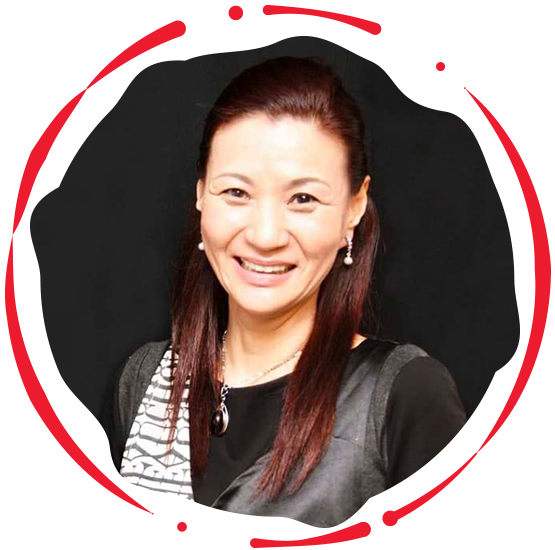
Food Doctor: Kanna Himiya Introduction
Samurai Table Food Doctor Founder
“Samurai banquet cuisine meeting” is held every month at the guest house.
"Japanese Cuisine Traditionist: Food Medicine Course" qualification certification course launched, and many other courses offered
*In 2017, gave a lecture as a representative of Japan at JAPAN SOCIETY in New York, USA.
She is a guest lecturer at Toita Women's Junior College, Odawara Junior College, Nippon Sport Science University, Gakushuin Women's University, and Women's Nutrition College.
*We hold briefing sessions from time to time. For questions or consultations, please contact himiyakanna@gmail.com For more information, please send a friend request to Kana Himiya on Facebook.
Before taking the dietary medicine course, I had spent the past two years learning about and practicing diet (including nutrition), exercise, sleep, stress care, psychology, and sometimes medical treatments based on American preventive medicine. I was feeling reasonably healthy and at a healthy weight, but I thought there was something missing. The same goes for the families and students at the school that I help run, and of course there are some who improve dramatically, but there are others who don't get better even if they do everything they can. Am I missing something? When I started thinking about this, I came across a food medicine course.
The food and medicine course incorporates things I have learned so far, but most of all, what I was able to learn was thinking about love in general, including prayer and purification, which was huge for me. Of course, I think it's okay to do all the health information out there, but I now think that the foundation is love, and I think it's difficult to survive in a true sense of physical and mental health without that.
In the food medicine course, you can learn the foundations of being a Japanese person (love and heart-building), so I am now able to value nature and myself, and think more seriously than before about how I can help others. As a result, I became clearer than ever about who I wanted to be of service to and how I would go about doing so, and it was great to have a clear direction for my life
After studying the course, it is really natural, but...
I thought that in Japan (and the world) today, people who are loving and considerate are successful as a result The definition of success may be different for different people, but for me, the definition of success is to live a life filled with happiness.Some people think that building a huge amount of wealth is success, and I'm embarrassed to say that there was a time when I thought that way too. But even if we only had money, I shudder to think of a world where there is no love at all
Managers who are considering the Bushido program may also be interested in There may be people who think that money is more important than love. However, my personal opinion is that if managers and leaders guide their employees with love, the employees will naturally grow and become proactive and want to be useful for the company and society. I'm here
On the other hand, companies whose managers and leaders cannot treat their employees with love may be able to make money momentarily, but I have the impression that small things will cause them to decline.
There are various reasons for this, and I love the many famous quotes left by Konosuke Matsushita, the former president of Panasonic, and I have the impression that they are connected to the Bushido program


I believe that by taking the Bushido program, your love for others will grow. As a result, you will develop a greater sense of caring and caring for yourself, and you will be able to grow by further improving yourself. I also thought that by treating employees with more love, the way they work would change, and the company would have the potential to further develop!
I believe that not only the president but also the employees will be healthy both physically and mentally, and by becoming a company full of vitality, we will become a company that is even more beneficial to the world
Specifically, I feel that President Morishita of Tempos is a very good model case