A court doctor known as a food doctor has researched herbal medicine to protect the health and improvement of the lives of feudal lords. Herbalism is the study of nature and its use. It is a science that studies everything that exists in the natural world. Herbalists had a spirit of exploration into the unknown, the ability to discover the value of things, and the role of conveying the power of the natural world to many people. Honso means a herb that serves as a medicinal book'' and is a medicine.
This science entered Japan during the Heian period, when it was introduced by the Tang monk Ganjin. During the Edo period, with the help of successive generations of Tokugawa shoguns, research was developed and the ability to observe the natural world was the power of medicine.
Particularly encouraged by Tokugawa Yoshimune, and with the cooperation of the public, he has produced remarkable research results. We have saved people's lives and supported their livelihoods by eliminating barriers of social status. Ekiken Kaibara, Konyo Aoki, and Gennai Hiraga are known as excellent herbalists.
With this content, herbalism is the basis of all academic studies, work, culture, and art. Focusing on herbal medicine, food medicine has deeply connected and deepened the connection with God, and this is the role of medicine in modern times. Through herbalism, we have spread the message that eating leads to medicine.
Samurai Cuisine Food Doctor Kana Himiya
~Message from a food doctor~
Children today have probably never touched soil, and children living in cities may have never seen a field. I don't know how food is made. I rarely even see my mother cooking. I don't even have dinner with my family. Such children will leave their food without hesitation. Therefore, a heart of gratitude and compassion cannot be cultivated. You grow up without knowing love.
If this is the current situation, will we be able to cultivate the ability to choose and make decisions about the foods that nourish our minds and bodies as adults? If you don't know how your food is made, you won't develop the ability to choose good food. They don't have the wisdom to choose. Because I don't know. It is unfortunate.
As one of the solutions,
By linking the school lunches to local agriculture, children can see how school lunches are made.
If you can actually experience farming and help with the harvest, you will understand how vegetables are made.
This is what we eat every day, and it was probably made by a farmer over there. This was made by that grandpa. You can feel and talk while eating. When this becomes a topic at the dinner table, the bond between parent and child naturally becomes smiles and gratitude. In this way, it would be great if we could develop ``food education'' that fosters compassion through eating. That's the most important thing.
Local farmers should also look directly at the children's faces, talk to them, and make food for the health and happiness of these children! Let's build for the future! I'm sure you'll be happy. I think this country would be a very happy country if it was a community where everyone was like family and full of consideration, and if it was agriculture.
When I was a child, I lived in the neighborhood with farmers who grew vegetables, so I was able to eat them with peace of mind. Even if you can't do that, I think there are many ways to bring children and farmers closer together. The current situation is probably the result of us adults seeking convenience, focusing too much on business, and not prioritizing spiritual enrichment.
If you still have time,
Together with the food doctor, once again, agriculture and the region. Would you like to join us in deepening the relationship between adults and children, taking action and making the world a better place? Would you like to learn?
All mothers are food doctors.
A mother's unconditional love.
Samurai Cuisine Food Doctor Kana Himiya
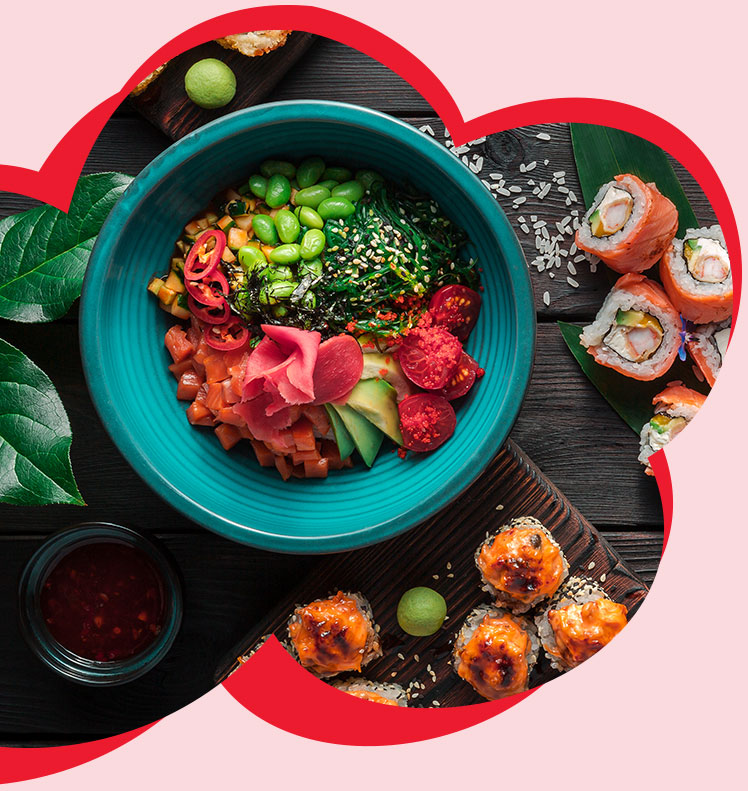
The collective name for these dishes is "Samurai's Cuisine". Our aim is to create dishes that are "historical reenactment foods" and "purifying Japanese cuisine", and to pass down Japanese history, culture, and the importance of life through cooking.
A food doctor was a palace doctor who supported the daimyo. That is the role of the priest. While connecting and communicating with heaven, he managed food as an onmyoji. Unfortunately, due to GHQ's policy of eradicating the Japanese spirit, this important divine will is now disappearing from this country.
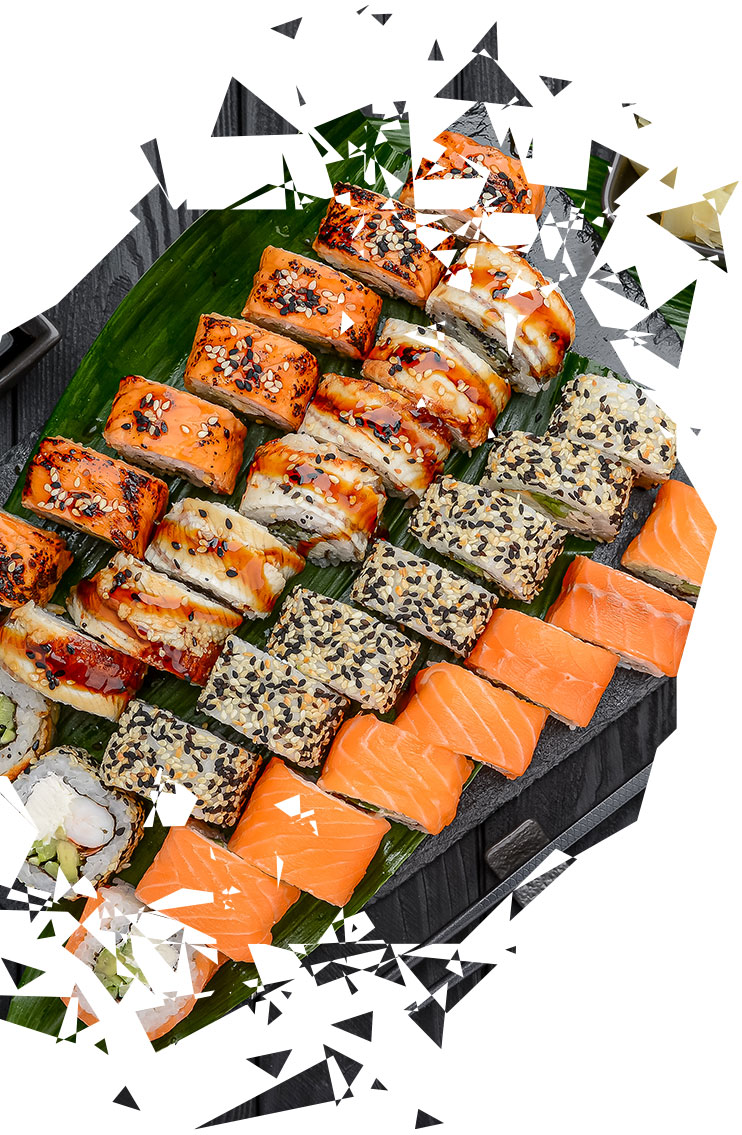
 I learned a wide range of things while receiving instruction and guidance from the descendants of feudal lords of each domain, as well as the descendants of the feudal lord's restaurants and chefs.
In addition, we researched traditional foods from all over the country based on oral traditions and ancient documents, and created them.
I learned a wide range of things while receiving instruction and guidance from the descendants of feudal lords of each domain, as well as the descendants of the feudal lord's restaurants and chefs.
In addition, we researched traditional foods from all over the country based on oral traditions and ancient documents, and created them.
The Samurai Dining Cuisine is "Japanese food culture perfected during the Edo period", and etiquette, customs, spirituality, and history are very important.
Samurai were generally frugal and frugal, and strictly disciplined themselves. However, on occasions of celebration, we offer "hospitality" with all our heart and soul, praying for good health, respecting nature, respecting others, and wishing for the prosperity of our descendants.
That's why there was a need for food that would help people live a long life, have good mental and physical health, maintain eternal beauty and youth, and maintain physical and mental strength. The "ultimate food culture" that incorporates such high-energy nutrition and spirit is the "Samurai Dining Cuisine".
Our greatest wish is to "pass on Japanese culture".
We also aim to foster international people who can convey Japan to the world.
Washoku folklore is synonymous with "Japanese culture folklore".
Through this course and the food medicine course, we hope that many people will be able to inherit the "samurai diet" and pass down the world-class healthy food that our ancestors have cultivated to their descendants.
Samurai Cuisine / Food Doctor Banquet Cuisine Expert Kanna Himiya
In the past, the most powerful people of the time, such as daimyo and lords, afforded to employ a personal doctor called "food doctor", to help them keep their physical and mental health.
A food doctor has a role similar to that of a priest or a shrine maiden. Their role is to communicate with the gods, pray, and purify the environment and food. They were able to "change the hearts" of people with dark minds and increase their spirituality so that they could communicate with God. They prayed for the peace of the world, purified the spirits of ancestors, the spirit world, and spirits, and maintained the stability of the country. At times, they would communicate with the world, listened to it, and were also involved in politics too.
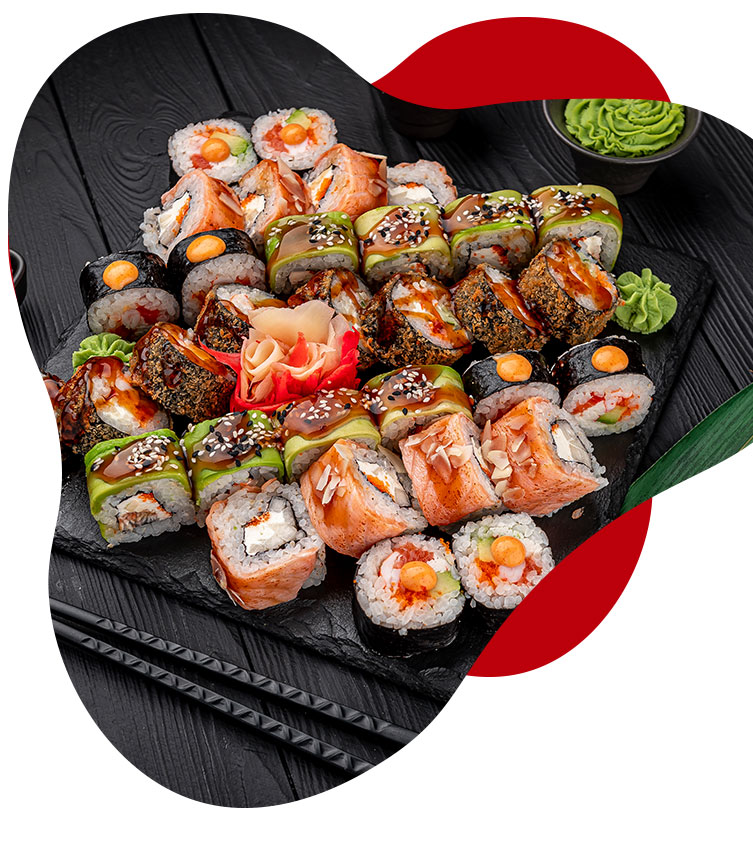
All of the lord's meals are dishes that carry the meaning of prayers and bring good luck.
As for ingredients, they had a medicinal herb garden and a medicinal herb mountain, and it was the best local area, a place of vibration. We grew seasonal medicinal herbs and vegetables using natural farming methods.
The area is also a place where a barrier has been set up to keep out evil spirits, created using feng shui, taking into consideration the natural features of the ore, water veins, mountains and rivers. In the language of the spirit world, it is also called ``the dragon's mountain, field, earth, river, wind, and water,'' and the land is also said to be the dragon's body and the dragon's abode.
The role of a food doctor is to purify the land. Prayers purify the land and remove evil spirits.
We make dishes using medicinal herbs and vegetables grown in such special lands, medicinal herb gardens and fields.
Food doctors were also responsible for serving the guests and serving as cooks, so they managed ingredients and provided cooking instructions.
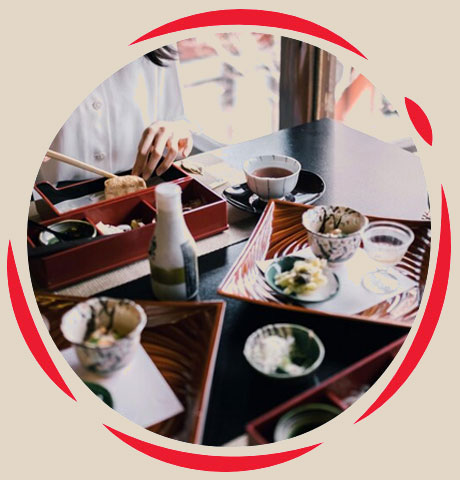
The way food is prepared, the cooking method, the environment, the setting, the vessels, the colors, shapes, and textures all have meaning and balance.
What was on the table was the universe itself, a dish that maintained harmony and harmony, and was the very soul of the universe. It was also a dish to be offered to the gods.
Everything was a sign of good luck, a prayer, and a wish for peace.
The combination and balance of dishes and utensils, the compatibility and harmony of vegetables, and even what to eat and when to eat were all taken into consideration based on the truth of the universe. When it comes to seasoning, great importance was placed on maintaining a balance with the human body, which has a microcosmic body.
It is the fusion of "five tastes, five laws, and five colors". That's why there is an order in which you eat.
There are differences in what each person eats and in what order they eat it.
There is also wisdom called "Japanese and Chinese''. Purifying Japanese food can only be achieved by taking everything into consideration, including each person's physical constitution, age, environment and region.
It is a food regimen that is "Fuji of the body, the whole of one thing".
Rather than the current commercially based "Japanese food," the original Japanese food was "purifying Japanese food", and by eating it, the Japanese were purifying their souls.
The true meaning of Japanese food, which has become a world intangible cultural heritage, is a "purifying Japanese food". Continuing these traditions is my great mission.
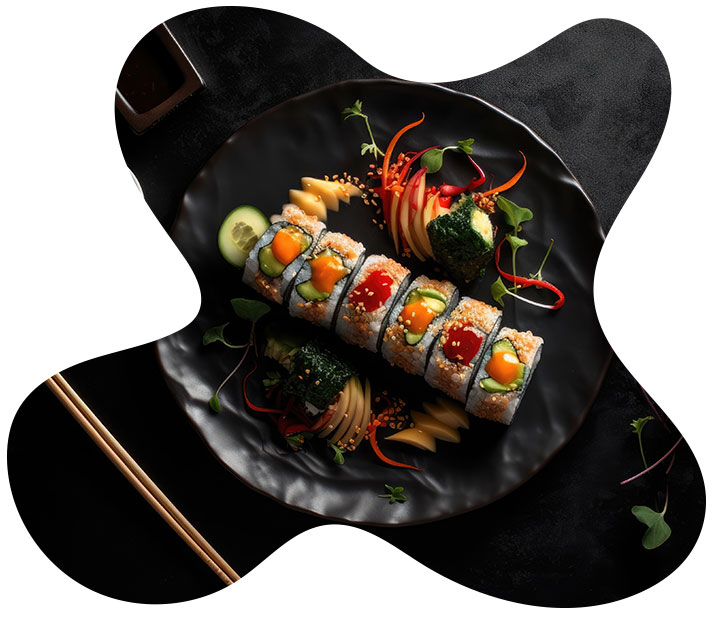
Welcome to the dining table of the Kaga Maeda clan.
"Your grandfather's grandfathers were traveling in palanquins for generations".
I remember my grandmother telling me, when I was little.
Palanquins? Does that mean they were lords?
That's right. Among my ancestors there was a vassal lord who served the Maeda family of the Toyama county, a branch of the Maeda family of the Kaga domain. It is said that our ancestors were responsible for taking care of the important "kitchen" of the Maeda clan. I'm not sure what my status is, but perhaps the fact that I'm currently working as a chef specialized in "food nutrition" may be through the grace of my ancestors.
Managing the lord's meals meant managing the health of the household, which was an important role. If the lord were to die from food poisoning, it could even lead to the death of the family. This is tough! Furthermore, it is common for lords to welcome lords from other families. I can't serve food that would embarrass me on the spot. We need to serve food that both parties can enjoy with peace of mind, that also creates a relaxed atmosphere, and that leads to the development of both families.
In particular, the latter type of cuisine, which decorates the occasion of "entertainment", is called "banjo-ryori". A reception, or hospitality. In modern language, it could be called a service. Hospitality is the epitome of care. Eating brings you closer together, makes you feel better, makes you more beautiful, makes you healthier... In fact, few people may know that this was established over 400 years ago.
I am active as a banquet cuisine researcher for the Kaga Maeda domain, and am also a Japanese food culture researcher and registered dietitian. Utilizing the wisdom of our ancestors in modern times. And we will develop it further. With this spirit of learning from the past, we would like to convey to everyone the fun and importance of "creating happiness through hospitality".
Now, speaking of the Kaga Maeda family, it is the Maeda family famous for "Maeda Toshiie" and "Maeda Keijiro", who are well known from dramas and novels. The Maeda clan is known as Kaga Hyakumangoku, and is one of the largest feudal lords in Japan, with the highest amount of koku second only to the Tokugawa shogunate.
The achievements of the legal wives who supported the feudal lord and laid the foundation for Kaga Hyakumangoku are immeasurable. For example, let's take Tamahime, the legal wife of Toshitsune Maeda, the third generation feudal lord who was hailed as a great prince. Tamahime was born as the second daughter of the second shogun, Hidetada Tokugawa, and when she was three years old, she was taken to Kaga (Kanazawa) and married at the age of fourteen. Tamahime's grandfather, Tokugawa Ieyasu, decided to marry Tamahime to Toshitsune in order to make the Maeda family pro-Tokugawa in exchange for taking Toshiie's legal wife, Matsu, hostage in Edo. It's a so-called political marriage. It can be said that the marriage was intended to imprint Tokugawa's influence on Maeda. This is because, although the Shogun family highly valued the potential power of the Maeda family, they also feared it. If you look back at history, you will see that many feudal lords who could influence the central government have had their families destroyed. In fact, the Maeda family was often accused of trivial accusations and were almost accused of starting a rebellion. However, from her childhood, Tamahime was raised with the assumption that she would become Toshitsune's wife, and she herself admired and loved Lord Toshitsune very much. Therefore, she truly wanted the Maeda family to continue. Fortunately, their relationship was very good, and in the ten years after their marriage, she raised three sons and five daughters, and at the same time, as Toshitsune's wife and Shogun Hidetada's daughter, she devoted herself to harmonizing the Maeda and Tokugawa families. During many crises, banquet cuisine played a role in reconciliation and persuasion.
The decisive difference between the samurai's "banōzen" and the home-cooked meals of other families is that it is "hospitality cuisine used for entertainment between families".
The Maeda family was the greatest feudal lord. Naturally, he was in a position where he was easily targeted by other Tozama daimyo and was easily noticed by the Tokugawa family, the shogun family. In order to protect not only the aforementioned Tamahime, but also the family and servants, diplomacy and entertaining, risking their lives, had a significant meaning for the family as well.
This may be true of modern business entertainment, but the fortunes of the family, not the company, depend on how the food was served, whether the hospitality was of the highest quality, and whether the customer was satisfied. I have no choice but to become
I believe that the vassal in charge of the banquet took great care in the ceremony. Therefore, the lord would appoint his most trusted vassal to serve as the receptionist.
If he makes one mistake, the fate of the Maeda clan will be doomed. The atmosphere in the banquet hall (kitchen area) must have been extremely tense. From this tension, Kanazawa's unique cuisine was born.
In Kanazawa, "steamed sea bream", "kabura sushi", and "jibuni" are must-haves for celebrations. These are said to be the king of Kanazawa's food culture, and at the time only high-ranking samurai were allowed to eat them. Fortunately, Kanazawa had three advantages in banqueting. The first is that there are traditional performing arts such as Noh, Kyogen, Kaga Manzai, and Shishimai. Second, there were gorgeous traditional crafts that could be presented as tribute. And because it was surrounded by the sea, mountains, and fields, it had an abundance of fresh and the best ingredients. Based on these, the Kaga clan's school, “Shijo Sonobe-ryu,'' used its secret techniques. As we learned more about these types of receptions, we learned that the “creativity'' that goes into preparing a reception, the wisdom and ingenuity put into cooking, and the “creativity'' that brings good luck is still passed down as part of Kanazawa's food culture. The passion that goes into each and every dish is the same today. It contains wishes for health and happiness, such as longevity, longevity, prosperity of descendants, good health, and peace of mind for the family. Nowadays, these would be lifestyle-related disease prevention foods, anti-aging foods, dementia prevention foods, and diet foods. The banquet cuisine, which has been handed down by our ancestors as a home-style dish since time immemorial, contains not only the colors of the Maeda family's home cooking and local cuisine, but also the wisdom of our ancestors.
As a banquet cuisine expert, I host a monthly hospitality banquet for the Kaga Maeda clan's annual event. During that time, I always wondered if this was a good idea. At that time, Toshitsune Maeda, the third lord of the domain, appeared in his dream and asked him to convey the following information. His behavior was intense and I was very surprised.
"This! This! Tell this! This is the basics of hospitality at a banquet. This is the most important thing."
Lord Toshitsune was seated in front of a black-painted high dining table, wearing a kamishimo (kami-shimo) robe, holding Wajima-lacquered chopsticks in his right hand, waving his hands vigorously up and down as he strongly conveyed his message to me. I did. He was shaking his chopsticks with all his might, and it was impressive to see the hem of his hem shaking so violently.
That is right. What Lord Toshitsune wanted to convey to me was the basics of banquets. That is a set of painted chopsticks. This means one chopstick per meal. This is the etiquette of changing the chopsticks every time the dish changes. That's how much I wanted them to value both the food and the people, so much so that I had to change my chopsticks every time the dish changed. If you use the same chopsticks, the taste of each dish will be spoiled. In addition, each time you change your chopsticks, the elaborate Wajima lacquered Kaga makie chopsticks will bring out the best in each dish. We paid attention not only to the bowls on which the food was served, but also to the chopsticks used to bring it to our mouths. This spirit was the basis of the Maeda family banquet.
The typical daimyo dining table is the "Shichi-Go-San" honzen ceremony. According to ancient documents, this is the “Shichi-Go-San'' ceremony, which is based on the tradition of the samurai family since the Muromachi shogunate, when they became court nobles. The common auspicious numbers used for celebrations are one, three, five, seven, and nine. Based on this auspicious number, the main meal usually had seven dishes, the second meal had five dishes, and the third meal had three dishes. Also, when it came to ceremonial meals for private celebrations, it was a full course meal, from the main meal to the fifth meal.
However, if it were to be served at a banquet, it would be a very large meal.
The first dish, the second dish, the third dish, and so on until the 13th dish, and it is said that the reception was held all day long, or for three days and three nights, and the guests were treated with all their heart and luxury. That's it.
Well, there is one etiquette that is unique to the Maeda clan at the daimyo's dining table. That is, when serving up to the fifth meal, miso soup without any toppings is served between the third and fourth meals (you can think of it as soup for the third meal). The soup is called “Hashirakashi soup''. A simple miso soup with no ingredients. When eating it, it was said that “chopsticks were running inside the bowl,'' which is why it was called “Hashirakashi soup.'' Perhaps it was meant to be a “chopstick break'' during a feast, or to rest the stomach and intestines. Even in such places, the thoughtful consideration for health is evident.
Of course, 13 dishes are served at the feast, so “Hashirakashi soup'' is served in the middle of the third and fourth offerings. The San no Kō consists of seven meals, and at this point, the first half of the festival, which included watching entertainment, was completed, and the tatami room was changed to a new place for entertaining with Noh and Uta songs. In modern terms, it would mean changing the restaurant for the after-party. In this way, it was a place of luxurious and extravagant receptions.
However, in its heart, it was a place of life-threatening peace making with the shogun family and other feudal lords. The fate of the Kaga clan depended on the manner in which it was presented and entertained. The Kaga domain is the largest domain with a million koku (1,200,000 koku) wealth and the richest finances among the feudal lords. Nowadays, it is a large company among large companies. However, that made them more likely to be targeted by the Tokugawa family. For the Tokugawa family, he is a figurehead. They were accused of treason over trivial matters, and the clan was wiped out. For example, when Mitsuhide Akechi entertained Nobunaga Oda, the seasoning of the food was said to be bland, similar to Kyoto style, which offended Nobunaga and caused him to be implicated. Even just the taste of a dish can be considered a fault and can lead to serious trouble.
In this way, to put it in modern terms, banquet entertainment is a once-in-a-lifetime entertainment event where the company's fortunes depend on it. It may be about making peace, closing deals, and protecting the company. It's the same thing now and in the past, even though it's work, it's entertainment that risks your life.
The secret to entertaining is to know what the other person wants, what they like, and to wish for the other person's health and serve them with health-conscious food. The key is to be attentive and considerate enough to reach the areas where it hurts.
There are also etiquettes in how food is presented. When it comes to serving food for banquets, the food is plated high. This is called “takamori'' or “tenmori.''
Why do you set it so high? It is given meaning as a “pillar'' offered to the gods. This format is considered to have been established as a way of serving food in aristocratic ceremonies after the Heian period.
In addition, in the Kaga domain, when there were green vegetables in a dish, the name of the vegetable was added to the word “na'' and “name.'' In other domains, it was eaten first as a “name.'' He ate it for the last time to preserve his name. It is also unique to the Kaga clan that there are many etiquettes that value the act of seeking meaning in words, the spirit of words (kotodama). Katsuobushi is “Katsuo''. Surume is "Jurume". In “Four Zen'', “four'' has the same sound as “death,'' so I guessed the character “yo'' and said “yo.'' In this way, the manners, customs, and heartfelt spirit that are common even today are expressed and passed down in the samurai's banquet hospitality.
The five colors are: blue, red, yellow, white, and black.
These five colors originate from the ancient Chinese theory of Yin-Yang and Five Elements.
The Yin-Yang and Five Element Theory states that all things are made up of the two elements of "yin and yang" and the five elements of "wood, fire, earth, metal, and water". The idea is that the world revolves around "waves," the elements of Yin-Yang and the Five Elements.
The five colors "blue, red, yellow, white, black" correspond to: wood = blue, fire = red, earth = yellow, gold = white, water = black.
The five elements include the five colors, the five directions, the five seasons, and the five human virtues.
Everything has a corresponding color, including the five senses represented by the human sense organs.
All of Japan's history and culture is based on the "truth of the universe".
The Japanese received frequencies from the higher-dimensional universe and incorporated them into Japanese culture, art, and technology to adjust the frequencies of all things and adjust the frequencies of the Japanese hearts.
In order to adjust this frequency, the Japanese have long placed great importance on the sense of "color".
Just like the colors in the Juni-Hitoe kimonos, and Japanese tableware, each color has a power received from a higher dimension.
In this way, you choose the color you like based on the frequency of the color, and the frequency your heart emits determines the color of your aura, and the two create your "soul color".
A "color that improves luck" is determined by combining the "color of the soul" with the color of the skin, the characteristics of the body, and the expression and shape of the face.
Everything in human relationships is made up of frequencies.
The compatibility of the color frequencies determines their relationship with each other. There is an attraction of connections and fateful encounters.
If the "color of your soul" that you emit changes, your frequency will change. As a result, what you are attracted to and your compatibility will change.
The content of this course is an easy-to-understand explanation of Yin-Yang and the Five Elements philosophy as the truth of the universe. Knowing how to use powerful colors it is possible to adjust and modify vibrations to improve your destiny for the purpose of purification. We will teach you everything about fashion that raises your vibrations, and food that purifies and raises your vibrations within your body.
It will be a grand study based on the "laws of the universe," but we will also teach you how to succeed by applying it widely in everything from human relationships to work.
If you are also certified as a dietitian, you will be able to offer courses. It will be a one-of-a-kind course that will add to your own learning. Would you like to learn together so that we can preserve and pass on the abilities and important teachings that we possessed as Japanese people?
Food Doctor Kanna Himiya